


Shopping Cart







The Trade Show Book - How to Exhibit, Connect and Sell at Trade Shows
LIB-SRM-001
Available for download in PDF
$65,000.0
Tax excluded
THE TRADE SHOW BOOK How to Exhibit, Connect and Sell at Trade Shows
Trade shows concentrate in a few hours what normally takes months: building trust, demonstrating value and accelerating purchasing decisions. However, most companies waste that opportunity due to lack of strategy.
The trade show book is a practical and direct guide for companies and entrepreneurs who want measurable results in every trade show participation. It addresses visitor psychology, the strategic role of the booth, how to plan with limited budget and how in the new era of artificial intelligence, integrate it to maximize return.
Format: PDF download file
Pages: 105
THE TRADE SHOW BOOK How to Exhibit, Connect and Sell at Trade Shows
Trade shows are one of the most powerful environments to generate real business opportunities. In no other channel is it possible to concentrate in 48 or 72 hours what would normally take months of commercial work: building trust, demonstrating value and accelerating face-to-face purchasing decisions.
However, most companies waste that opportunity. They set up a booth, place materials on a table, send their team unprepared and go home with business cards that never turn into business. The problem is not the trade show. It is the lack of strategy.
This book was born to close that gap.
The trade show book is a strategic, practical and direct guide for companies, entrepreneurs and sales teams who want to transform their trade show participation into measurable results. You will not find abstract theories or academic concepts disconnected from reality here.
You will find principles applicable from the first day of planning to the last post-show follow-up.
Throughout its chapters, the book addresses the strategic nature of trade shows, visitor psychology, the role of exhibition as a commercial tool, types of booths and how to choose the right one, planning with limited budget, effective team execution and the use of technology and artificial intelligence to maximize results.
Each chapter is built on a fundamental principle: at a trade show, the booth is the first seller. Before the team, before the pitch, before the product. And a company that understands that has a structural advantage over all those that do not.
Written by Sergio Rodríguez Mejía, founder of Grupo SRM and specialist in commercial exhibition strategy, this book is the synthesis of years of direct experience in the design, manufacturing and implementation of exhibition solutions for companies across different sectors and industries.
Trade shows await those who arrive prepared. This book helps you be one of them.
--------------
WHAT'S INCLUDED?
Format: PDF download file
Pages: 105

THE TRADE SHOW BOOK
How to Exhibit, Connect and Sell at Trade Shows
Sergio Rodríguez Mejía · Grupo SRM · 2026
TABLE OF CONTENTS
Foreword
Introduction — The Human Need to Exhibit
— The origin of trade shows as a commercial system
— Exhibition as a perception tool
— The modern environment: a world saturated with information
— The true value of a trade show
— The purpose of this book
PART I · STRATEGIC FOUNDATIONS
Chapter 1 The nature of trade shows
— The concentration principle
— The acceleration of commercial time
— The efficiency of direct interaction
— The building of trust
— Visibility as an economic asset
— Why trade shows continue to exist
Chapter 2 What is a trade show exhibition?
— The difference between promotion and experience
— The trade show as a high commercial intent environment
— The trade show as an accelerated trust environment
— The role of the booth within the trade show exhibition
— The trade show exhibition as a strategic tool
Chapter 3 Trade shows in the digital age and artificial intelligence
— AI can inform, but cannot replace physical experience
— Artificial intelligence is increasing the value of trade shows
— The fundamental change: the trade show as a hybrid ecosystem
— The immediate future: fewer interactions, but more valuable ones
— Trade shows as a final validation environment
Chapter 4 Types of trade shows and how to choose the right one
— B2B trade shows: business between companies
— B2C trade shows: business with the end consumer
— Specialized trade shows
— Multi-sector trade shows
— Classification by geographic scope
— How to evaluate if a trade show is worth it
PART II · VISITOR PSYCHOLOGY
Chapter 5 How the visitor thinks and decides
— The perceptual brain: how a booth is processed
— The visual interruption principle
— The immediate clarity principle
— The friction reduction principle
— The signal evaluation principle
— Why a visitor stops
— Why a visitor keeps walking
Chapter 6 The psychology of commercial trust
— The effect of physical presence
— The coherence effect
— The team's role in building trust
— Accelerating the trust cycle
PART III · THE POWER OF DISPLAY
Chapter 7 The strategic importance of display
— The first sale happens before the first word
— Perception defines perceived value
— The booth as a filter for the right customers
— Direct impact on lead generation
— The booth as a physical extension of the brand
— The booth as a strategic investment
Chapter 8 Strategic commercial architecture
— The five objectives of an effective exhibition
— The strategic function of height
— The strategic function of lighting
— The strategic function of messaging
— The strategic function of visual hierarchy
Chapter 9 Portable booth vs modular vs custom
— Portable booth: functional presence — definition, advantages and when to use it
— Modular booth: strategic balance — definition, advantages and when to use it
— Custom booth: leadership and positioning — definition, advantages and when to use it
— Real ROI: reusability as a determining factor
— Recommended strategy by company stage
Chapter 10 How a well-designed booth multiplies leads
— The real formula for lead generation
— The invisibility effect: the most costly problem
— Elements that generate real attraction
— The principle of visual disruption applied
— The mathematical impact on lead generation
— Design as an investment, not an expense
— The booth as brand materialization
— How to compete with larger booths
— The ten principles of the strategically effective booth
PART IV · PLANNING AND PRIOR STRATEGY
Chapter 11 How to plan a trade show on a tight budget
— Step 1: Define a specific and measurable objective
— Step 2: Choose the right trade show, not the biggest one
— Step 3: Optimize booth type for budget
— Step 4: Invest more in strategy than in structure
— Step 5: Use technology to multiply results
— Step 6: Generate meetings before the trade show opens
— Step 7: Calculate expected return before investing
Chapter 12 Sales team preparation
— What each team member should know
— The presentation pitch: the first 30 seconds
— How to approach visitors correctly
— Qualifying questions before presenting
— What the team should NOT do
Chapter 13 Action plan: the 90 days before the trade show
— Weeks 1 to 4: Definition and contracting
— Weeks 5 to 8: Design and sales preparation
— Weeks 9 to 10: Pre-marketing
— Week 11: Logistics preparation
— Week 12 (days before): Final preparation
PART V · EXECUTION DURING THE TRADE SHOW
Chapter 14 How to execute your trade show participation
— Rule 1: The booth should invite, not intimidate
— Rule 2: The team must initiate contact
— Rule 3: Listen before presenting
— Rule 4: Present value, not features
— Rule 5: Capturing information is mandatory
— Rule 6: Body language communicates more than words
— Rule 7: The goal is to open relationships, not close sales
Chapter 15 How to attract visitors to your booth
— Strategy 1: Dynamic visual activation
— Strategy 2: Live demonstrations
— Strategy 3: Clear and powerful visual content
— Strategy 4: The team as an active element
— Strategy 5: Pre-scheduled meetings
— Strategy 6: Participation activities
Chapter 16 Professional lead capture
— Why memory is not enough
— Capture options: digital form, QR code, scanning, business cards
— Minimum information to capture per contact
PART VI · FOLLOW-UP: WHERE THE REAL BUSINESS HAPPENS
Chapter 17 The art of post-trade show follow-up
— The critical window: the first 48 hours
— First contact: how to do it effectively
— The recommended follow-up sequence
— Lead qualification as an efficiency tool
Chapter 18 How to convert leads into customers
— The post-trade show funnel
— Personalization as a competitive advantage
— The role of CRM in the post-trade show process
PART VII · MEASUREMENT, ROI AND SCALING
Chapter 19 Evaluation and measurement of results
— Indicator 1: Number and quality of contacts generated
— Indicator 2: Real business opportunities
— Indicator 3: Sales generated directly and indirectly
— Indicator 4: Return on investment (ROI)
— Indicator 5: Cost per contact and cost per customer
— Indicator 6: Non-immediate strategic value
— Internal team evaluation
Chapter 20 How to turn trade shows into a permanent growth channel
— Trade shows as a system, not as events
— The compound effect of recurring participation
— How to scale results over time
— Trade shows as a source of market intelligence
PART VIII · THE FUTURE OF TRADE SHOWS
Chapter 21 Hybrid trade shows and technology
— What is a hybrid trade show
— Technology in service of the trade show experience
— The smart booth of the future
Chapter 22 The future of human contact in business
— The automation paradox
— Trade shows as high-value experiences in the age of automation
— The next 20 years of trade shows
PART IX · PRACTICAL GUIDES AND TOOLS
Chapter 23 Complete checklist for a successful trade show participation
— Phase 1 — Before the trade show: objective definition, design, team, communication and capture
— Phase 2 — During the trade show: daily preparation, behavior, interaction and registration
— Phase 3 — After the trade show: organization, follow-up and evaluation
Chapter 24 Trade show management templates and tools
— Objective definition template
— Contact registration template
— Post-trade show evaluation template
— Post-trade show follow-up email template
Conclusion — Business is still human
About the author — Sergio Rodríguez Mejía
------------------
Please note:
Can be downloaded up to 2 attempts, and once purchased, you have 30 days to download it from this store.
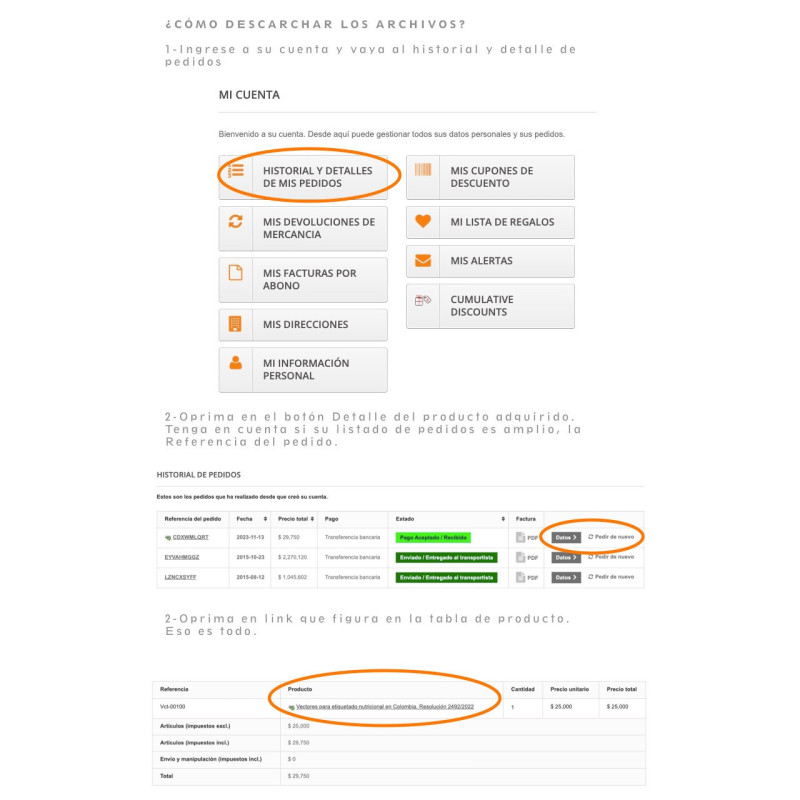
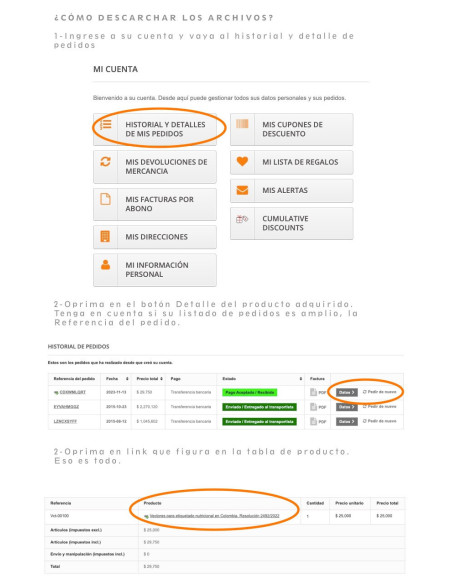
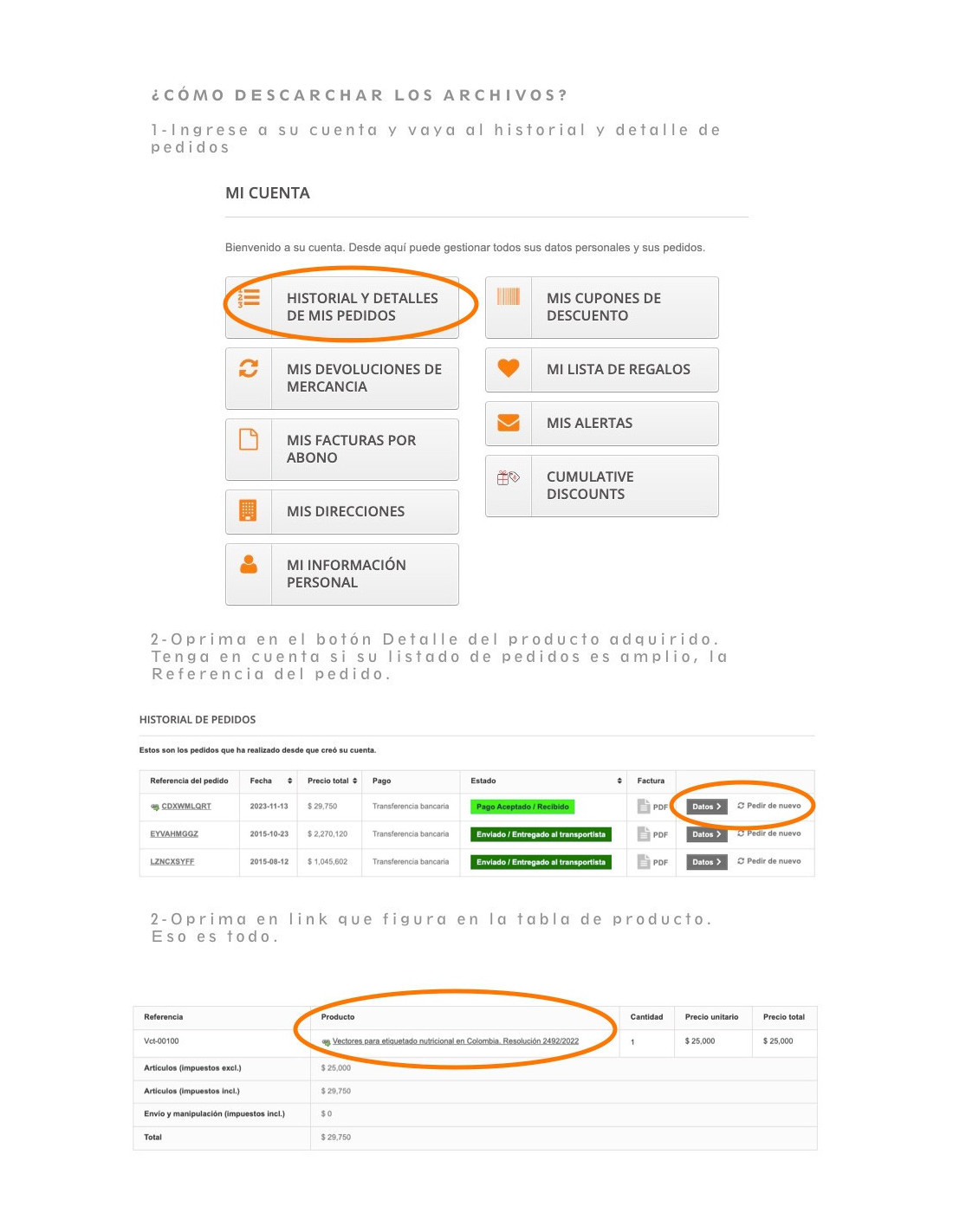
To download it, log into your account. In the purchases section, you will find the download link.
743 Items
New
I. MANUFACTURING, FINISHING, PREPARATION OR SETUP TIMES FOR MADE-TO-ORDER PRODUCTS:- FURNITURE FOR PORTABLE AND ECO-FRIENDLY BOOTHS- TALKERS AND DISPLAY STANDS
Manufacture ONLY of the STRUCTURE (without printing):
For 1 up to 2 units of product:
The size of each element is described in the "Technical Sheet" tab of the product.
- Small display or furniture: 2 to 4 business days
- Medium display or furniture: 4 to 6 business days
- Large display or furniture: 6 to 12 business days
For every 2 additional units of product:
- Small display or furniture: 1 business day
- Medium display or furniture: 2 to 3 business days
- Large display or furniture: 4 to 5 business days
If your order involves several different models, to know the TOTAL time, you must add the estimated time of the longest-duration item and add the shorter time of the shorter-duration items, as follows:
Example: You ordered 3 references considered large and 2 considered small and we will also assume that you deliver artwork for printing within the first 5 business days of structure manufacturing, then:
12+2+5=19 business days.
12 days for the first 2 units (large) + 5 additional days for the additional unit (large) and 2 days for the references (small). This would add up to 19 business days.
Since printing days are calculated over 11 business days, but you deliver files on the fifth day, this process is assumed within the structure manufacturing time.
Your entire order (structure and printing) will be ready within a maximum period of 19 business days.
Important:
- An ORDER is understood once the purchase is generated on this platform.
- An ORDER is understood once the money is AVAILABLE in our account or in cash.
- Contracted jobs generate an internal production order (OPI) until 10:00 am of each business day once payment has been reported.
- If payment is received or reported after this time or on a different date than the payment, the process will begin the next business day after notification.
You must report payments made by bank transfer or deposit.
- Additional services contracted (Design / printing):
The fabrication of the structure, the graphic design of the accompanying pieces, and the printing of such designs are independent processes.
These timeframes can be considered in parallel within the structure elaboration timeframes, as long as the files or artwork are available within the timeframe set for that process.
1. Design: (There are two alternatives)
- If you will develop and provide the design and artwork for the system:
Once the internal production order (OPI) is generated, the technical datasheets will be sent to your registered email so you can elaborate the advertising materials for the product or products purchased.
Important:
We do not carry out design reviews, spelling, piece fitting, and others on designs made by third parties
We do not make corrections or adjustments to designs that have been made by third parties
We do not carry out size adjustments
Files will be printed exactly as supplied by the Customer
- If you request us to design the graphic pieces:
Once the design is approved by the customer, the printing and mounting process will proceed on the sheets arranged for it, as well as the finalization with the fastening system. This process takes between 3 and 4 business days.
If the artwork is approved before 10:00 a.m. (Colombia Time) it will enter the process and production queue. Files approved after 10:00 a.m. will be understood as received the next business day.
Please see the brand page for technical information on submitting your files.
2. Graphic material printing for booths:
Our printing process and production queue should be calculated in business days once the files are delivered by the customer.
Files delivered before 10:00 a.m. (Colombia Time) will enter the process and production queue. Files received after 10:00 a.m. will be understood as received the next business day.
Print times for 1 to 2 units of product:
- Printing for small display or furniture: 1 to 2 business days
- Printing for medium display or furniture: 2 to 3 business days
- Printing for large display or furniture: 3 to 5 business days
Printing times for up to 5 additional product units:
- Printing for small display or furniture: 1 business day
- Printing for medium display or furniture: 2 business days
- Printing for large display or furniture: 3 to 4 business days
--------------------------
II. PREPARATION TIMES FOR OTHER PRODUCTS IN STOCK AND/OR CUSTOM ORDER:- SECURITY AND DISPLAY PRODUCTS
"Available: Immediate delivery or dispatch" will be indicated in the listing when there is stock availability in the local warehouse for immediate delivery.
Generally, orders are processed as follows:
- Immediate delivery at our headquarters.
- Maximum preparation time for shipment: 1 business day after the order is placed and payment is made.
- If the order is placed before 10:00 am, the collection request will be issued the same business day. Collection is expected to occur the same day, or at the latest the next business day.
- If the order is placed on a non-business day, it will be sent the next business day.
- If the order is placed after 10:00 am or your payment is confirmed by you and the bank after that time, the collection/shipment request will be made the next business day.
IMPORTANT: Carriers generally carry out merchandise collection every day; however, in some cases they carry out this process until the next business day.
- When there is no immediate stock availability:
1. The listing indicates the estimated time for the arrival and preparation of the merchandise once the order is placed. Generally you will see it expressed as: "Delivery in X to X business days"
2. It may indicate a close or tentative date on which you will receive the new product stock.
3. For orders exceeding 300 units, the time may extend to 25 business days, due to customs and legalization processes.
--------------------------
III. LARGE-FORMAT PRINTING SERVICES:
- LARGE-FORMAT PRINTING
This type of work generally has a queue for production.
Jobs enter the queue in order of arrival.
The production queue may be 1 to 3 business days before starting your process.
From 1 to 5 square meters: 1 business day + Queue
From 6 to 10 square meters: 2 business days + Queue
From 11 to 20 square meters: 3 business days + Queue
For every additional 15 meters of printing: 1 additional business day
These times do not include additional processes, such as lamination, assembly, cutting, finishing and final touches.
These times will vary depending on the quantity of additional processes required, their complexity and amount of product required, starting from 1 additional day.
--------------------------
IV. CNC MACHINING AND CUTTING PLOTTER SERVICES
This type of work generally has a production queue.
Jobs enter the queue in their order of arrival.
The production queue can be 1 to 3 business days before starting production.
For 1 - 2 machine loads (Maximum material size supported)
Simple cuts: 2 business days + Queue
Intermediate cuts: 3 business days + Queue
Complex cuts: 4 business days + Queue
For each additional load (Maximum material size supported)
Simple cuts: 1/2 or 1 additional business day
Intermediate cuts: 2 additional business days
Complex cuts: 3 additional business days
These times do not include additional processes, such as finishing, polishing, sanding, or completion.
These times will vary depending on the number of additional processes required, their difficulty, and the quantity of product needed, starting from 1 additional day.
--------------------------
BUSINESS HOURS AND WORK CALENDAR:
To learn about our business hours and work calendar, please visit Contact
Structure fabrication (without printing)
Lead times are counted from the internal production order (OPI). Additional units depend on product size (highlighted row).
| Size | 1 to 2 units | For every 2 additional units |
|---|---|---|
| Small | 2 to 4 business days | 1 business day |
| Medium | 4 to 6 business days | 2 to 3 business days |
| Grande | 6 to 12 business days | 4 to 5 business days |
The size of each element is described in the "Technical Sheet" tab of the product.
Printing of graphic materials
| Size | 1 to 2 units | For every 5 additional units |
|---|---|---|
| Small | 1 to 2 business days | 1 business day |
| Medium | 2 to 3 business days | 2 business days |
| Grande | 3 to 5 business days | 3 to 4 business days |
How to calculate the total time for multiple models
If your order includes several different models, the TOTAL time is calculated by adding the estimated time of the model with the longest duration and the shorter time of those with shorter duration.
Example: ordered 3 large references and 2 small ones, and delivers the printing artwork within the first 5 business days of structure manufacturing: 12 + 5 + 2 = 19 business days.
12 days for the first 2 units (large), 5 days for each additional large unit, and 2 days for small references. Printing is calculated over 11 business days, but since you deliver the files on the fifth day, this process is included within the structure's manufacturing time. Your entire order (structure and printing) will be ready within a maximum of 19 business days.
Important
- An ORDER is understood to be generated once the purchase is made on this platform.
- An ORDER is understood to be generated once the money is AVAILABLE in our account or in cash.
- Contracted jobs generate an internal production order (OPI) until 10:00 a.m. each business day, once payment has been reported.
- If payment is received or reported after this time or on a different date, the process starts the following business day after notification.
- You must report payments made via bank deposit or transfer.
Additional services contracted (design / printing)
The fabrication of the structure, the graphic design of the accompanying pieces, and the printing of these designs are independent processes. They can be developed in parallel within the structure's manufacturing timeframe, provided that the files or artwork are available at the scheduled time for that process.
1. Design (two alternatives available)
If you develop and provide the design and artwork: once the OPI is generated, we will send the technical specifications to your registered email so you can create the advertising materials for the product(s) you purchased.
- We do NOT perform design reviews, spell-checking, layout adjustments, or other reviews on designs created by third parties.
- We do NOT make corrections or adjustments to designs created by third parties.
- We do NOT perform size adjustments.
- Files will be printed exactly as supplied by the customer.
If you request us to design the graphic materials: Once the design is approved by the client, we proceed with printing, mounting on the sheets prepared for this purpose, and finishing with the fastening system. This process takes between 3 and 4 business days. Artwork approved before 10:00 a.m. (Colombia time) enters the production queue that same day; artwork approved after that is considered received the following business day.
2. Printing of graphic material for booths
Our printing process and queue are calculated in business days once the client delivers the files. Files delivered before 10:00 a.m. (Colombia time) enter the production queue that same day; files received after that are considered received the following business day. Check the brand page for technical information on how to send your files.
BUSINESS HOURS AND WORK CALENDAR
To learn about our business hours and work calendar, please visit Contact.
Comments (0)
No customer reviews for the moment.
Tap to zoom